

It's a job of opening doors
In Vinhais, when we started our work, we observed an interesting situation. On the one hand, local festivities related to caretos had been growing in popularity in recent years, attracting new people from the community to participate and large audiences from outside to watch. On the other hand, local weaving had been in decline (or dying out) for many years, which led to the bizarre situation of needing new costumes, but having no local fabric for them.
Traditionally, old blankets were used to make costumes for the Caretos festivals. The reuse of these blankets, which were always woven locally, led to the creation of a visual language that we can easily read in the cluster of old caretos costumes used in each region, as in the two images of the caretos from the Festa de Santo Estêvão, in Ousilhão (Vinhais), which we see below.
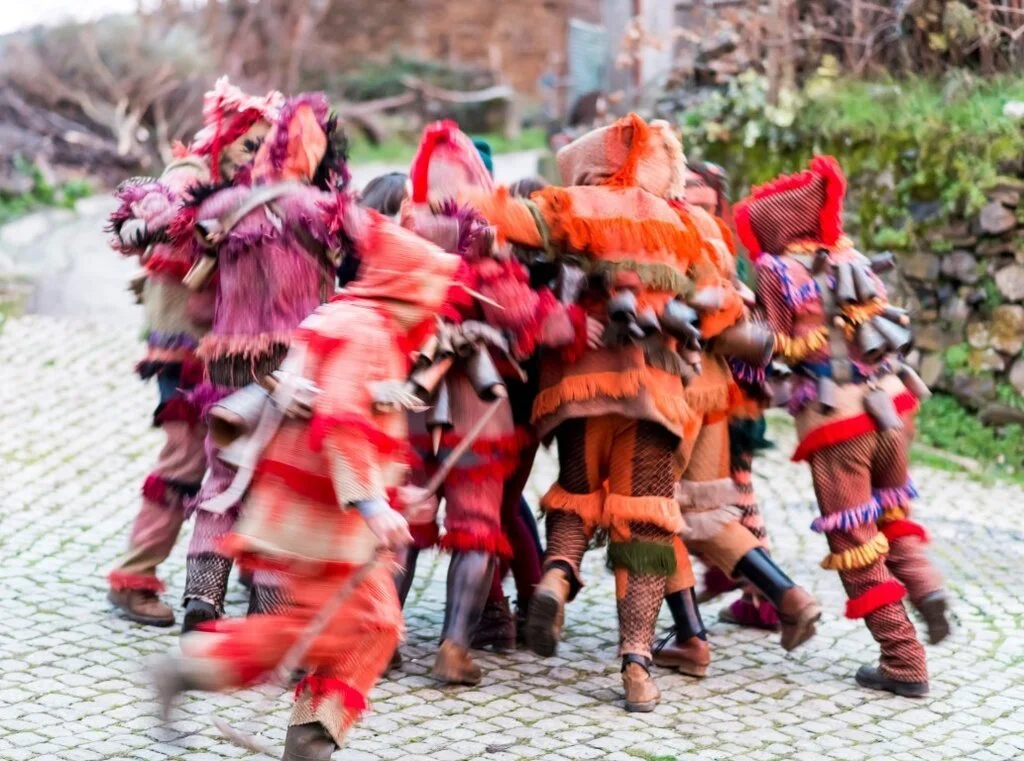
Image of the Caretos at the Festival of Saint Estevão, held in Ousilhão (Vinhais), where we can clearly see the color palette and fabrics used in traditional costumes.
Image: Rota da Terra Fria

Image of the Caretos at the Festival of Saint Estevão, held in Ousilhão (Vinhais), where we can clearly see the color palette and fabrics used in traditional costumes.
Image: Rota da Terra Fria
But the celebrations continue, and with a lack of old blankets and places to cut them, fabrics began to arrive from other regions of the country and even from Spain, diluting the local visual language, which was so specific. An example of this can be seen in the image below. If we look closely, we can see that the costume in the middle is clearly different from the other two: it was produced recently from fabric brought in from outside the region and does not have the same language.

In this image, captured by us in January 2022, we can see that the costume in the middle is clearly different from the other two. This one was produced more recently from fabric brought in from outside the region.
Therefore, one of the objectives of our work was to make the production of these traditional fabrics possible again. To this end, the first step was to survey old pieces (many blankets, but also careto costumes) from which we could identify and record the types of weaving that were traditionally used in Vinhais. This survey was only possible with the help of key members of the community, such as Sandrina and Leandra, who helped us open the chests where these pieces were stored.


The second step was to translate these fabrics into a language that could be understood by any contemporary weaver, in Vinhais or anywhere else in the world. Weaving has its own language that is used worldwide. It is somewhat similar to the way that music and mathematics have their own languages, which is what allows all musicians or mathematicians to understand each other.
Each of the identified types was then translated into this universal language of weaving, producing sketches and technical data sheets for each of the fabrics. This work was carried out by Guida Fonseca and Fernando Rei, who, in addition to being our trainers, already have years of experience specifically in the technical analysis of Portuguese fabrics.
These technical data sheets were compiled into a small manual, “Tipologias de Tecelagem de Vinhais” (Types of Weaving in Vinhais), which was then distributed to the weaving trainees of the “Cultura para Todos” (Culture for All) project, but which has also been available to everyone free of charge on our website ever since.
From that moment on, any weaver was able to weave fabrics according to the types observed in Vinhais. The translation of traditional local fabrics into the universal language of weaving made the production of these fabrics possible again and more accessible.

The Weaving Typologies in Vinhais book is available for free on our website.


The technical specifications of one of Vinhais' traditional fabrics, featured in the Weaving Typologies in Vinhais book.
As part of the project, new people received technical training in weaving. Training in which they learn to weave, but also to read patterns, make designs, warp, set up looms, and more. We want this training to be technically rigorous, providing trainees with the basic tools that will allow them to explore weaving as they see fit. This exploration can be local, but also global. To be clear: this was technical work, based on rigorous and structured knowledge in the field of weaving, which made it possible to reactivate the production of these textiles in Vinhais and Podence.


Let us return to the case of Sandrina e da Sofia, who were part of the group that received this training in weaving in Vinhais, and who ended up setting up a partnership that allowed them to start producing careto costumes in accordance with the various traditions of Trás-os-Montes, not just Vinhais. In them, we recognize the great effort and willpower that are necessary to develop a project of this nature in Portugal.
Perhaps the work we did in producing this book on the Typologies of Weaving in Vinhais and in providing training was not enough to justify the fantastic work they have been doing, but we believe it was enough to open a door and create the possibility for their existence. And sometimes opening doors to the right people is all it takes.
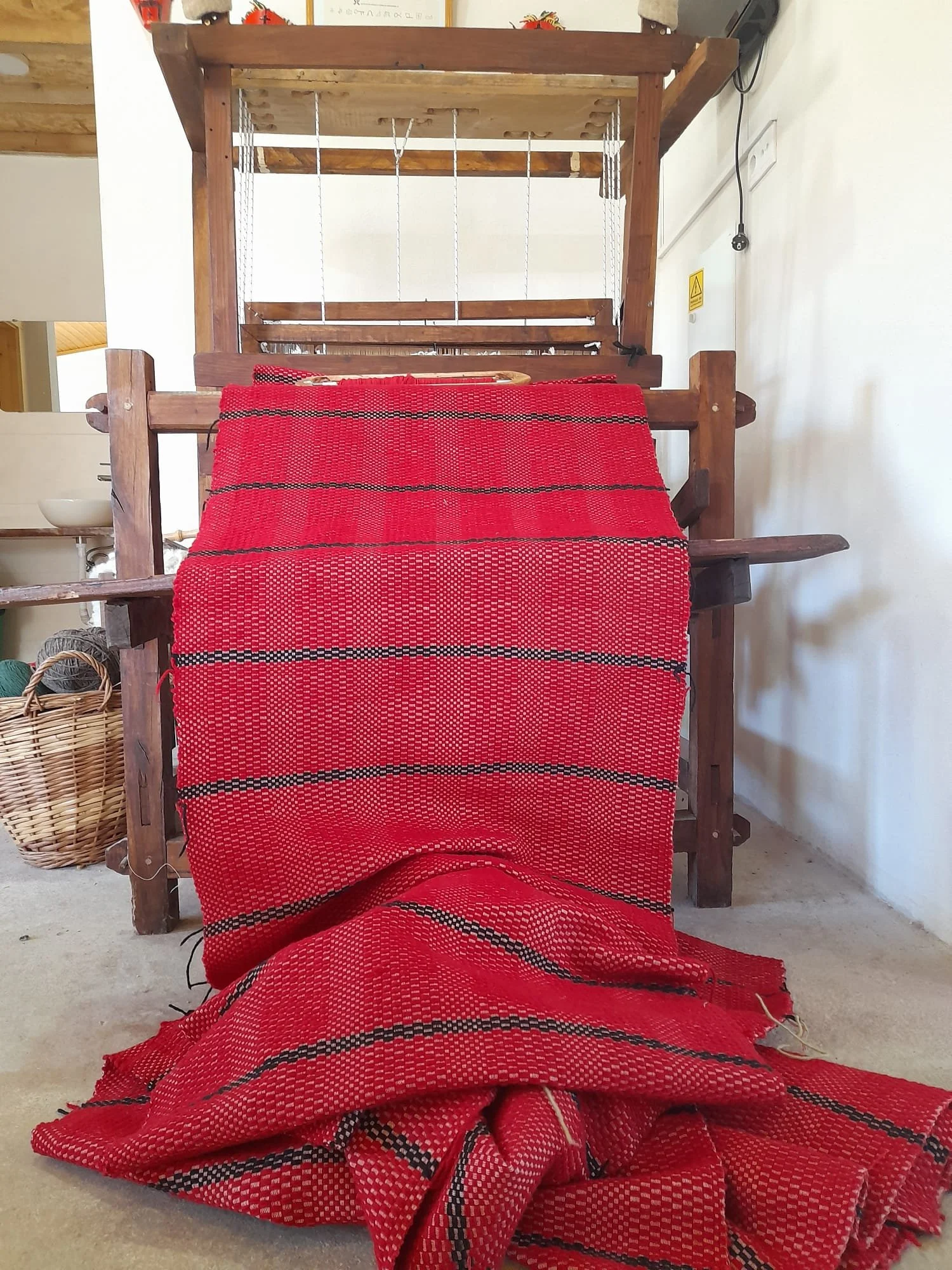
Fabrics produced by Sandrina Fernandes from “O Barandoco”
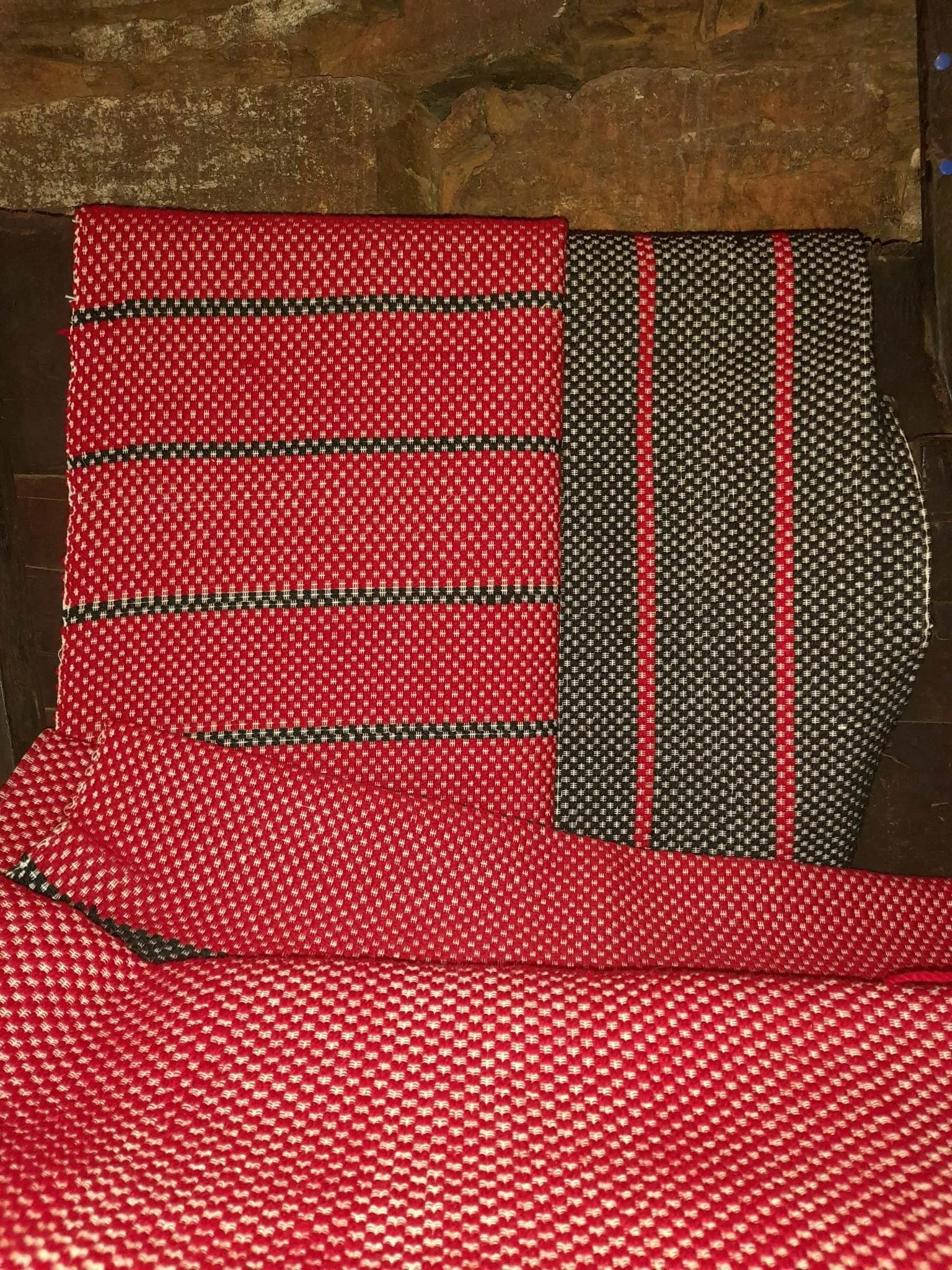
Fabrics produced by Sandrina Fernandes from “O Barandoco”
