

Adelaide and the wool

Visiting D.Ana for her to explain me about the loom patterns, I was lucky to meet her older sister Adelaide. She brought a few more patterns and blankets with her for me to understand better.


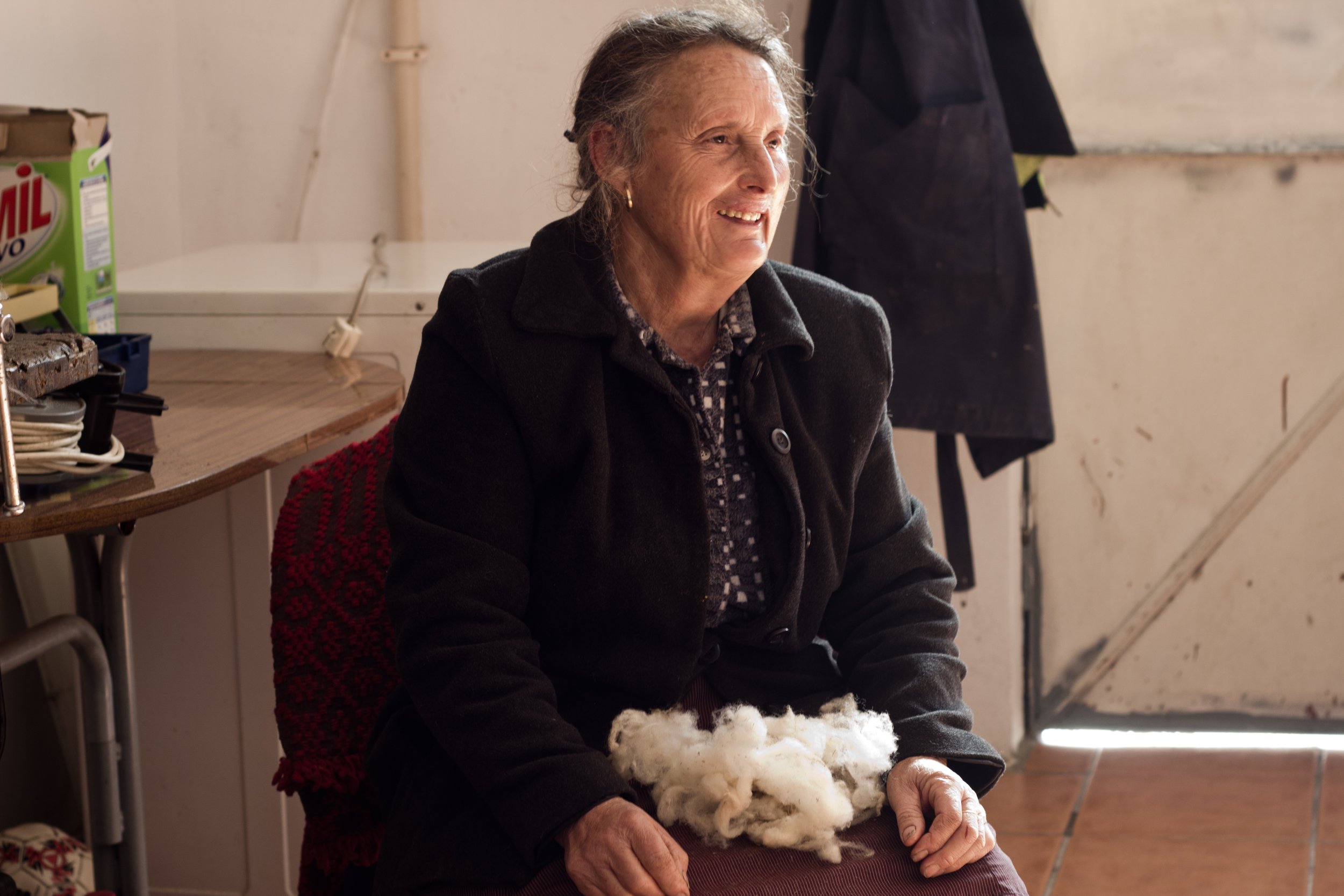
While we were talking about wool in general, that was spread all over, I asked her to let me record her explaining a few things she had told me previously. Adelaide is the oldest of 5 brothers and has been weaving since she was 9 years old. She taught it to her sisters, including Ana that currently also weaves at the Casa da Lã in Bucos.
D. Adelaide talks about how to obtain good wool you have to treat the sheep well and how the conditions in which flocks are currently kept, especially those that have little access to free pasture, are detrimental to the use of the wool.
D. Adelaide talks about the difference between good wool and bad wool, and how it also depends on the part of the sheep's body from which it is sheared. The best quality wool always comes from the back of the animal, where the fibers are longer and are not in areas that can be damaged by feces. The wool from the chest and legs, being shorter, is generally not used, but when it is used it never results in the best quality work.
