
Shearing School 2026
This was not the first time we organized shearing training. Back in 2016 we ran a small workshop on the subject and, in 2023, already with our certification as a professional training provider in place, we delivered three courses to organisations that approached us to upskill their staff for this essential stage of sheep welfare. It was, however, the first time we organised training open to the general public, bringing together individuals who, for a variety of reasons, felt the need to develop skills in an area as specific as sheep shearing.
The Shearing School grew out of years of wool training in Portugal, during which we repeatedly came across small-scale producers and other people interested in this fibre who find the lack of qualified shearers to be their very first obstacle to making the most of the wool they produce. From the moment we began training people in quality wool processing, covering shearing and its best practices, a problem became clear: when participants went out into the field, they could not find professionals who met the standard they had encountered in training, and that is where the difficulties began.
Our aim is therefore to build towards independence, enabling participants to shear sheep on their own terms, whether for their own animals or in community settings, with a focus on valuing textile fibre and on animal welfare.
This year, following a period of consultation with interested audiences and an analysis of shearing courses in the United Kingdom, Spain and France, we designed a two-day intensive programme aimed at people with no prior experience in the field.
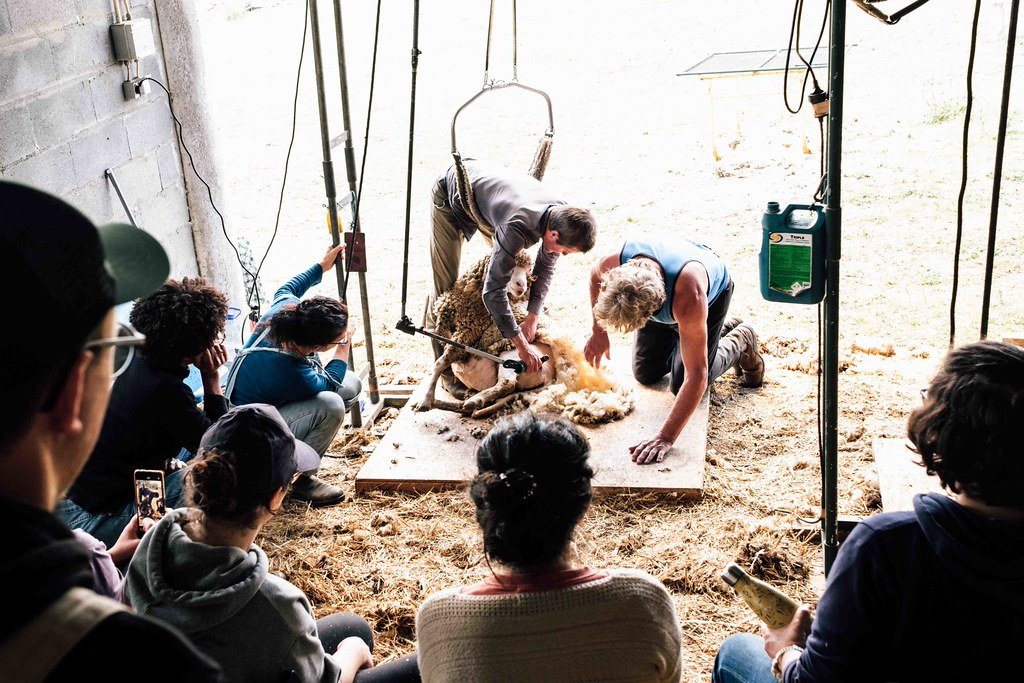
They were two intense but deeply rewarding training sessions. As expected, those who sought us out did so with the goal of becoming self-sufficient in shearing small flocks, whether their own sheep or those of the community around them, which lacks someone who knows how to carry out this process. Both groups were enormously engaged, not only with shearing itself, but also with native breeds, wool, and fibre processing.
Our training is centred on the Bowen technique, the most widely used professional shearing method in the world. The focus is on teaching the choreography with precision: just as in a dance, the Bowen technique requires learning positions and movements in a specific sequence, which is what allows us to optimise the removal of the wool as a whole fleece, the comfort of the animal, and that of the shearer. All of this calls for gentleness and sensitivity in understanding the anatomy and handling of the animal.
Martin O'Connell, who has worked with us for over ten years, is not only an excellent teacher, but also an excellent teacher. He conveys every technical detail with precision and with boundless patience for each individual participant, while also being a fine example of the civility and professionalism this trade demands. This is, in fact, a key point for us at Saber Fazer: we are fully committed to teaching the technique rigorously, but we are aware that many shearers currently working in Portugal fall short simply because they do not understand the standards the profession requires.
One by one, each participant sheared their sheep, the first under Marty's guidance and the following ones already independently, though with close support throughout. Susana O'Connell was by Marty's side across the entire training and also led the lessons on the role of the person who clears the belly and short wool from the shearing platform and takes the fleece to the skirting table.
Beyond the shearing itself, we wanted this course to cover the processes that must always follow it. While some students were shearing, at the table we would teach skirting, sorting, and rolling the fleece. And so, the conversation at the skirting table with Alice Bernardo inevitably turned to native breeds, their wool types, and their uses, which helped to make these two training days into something far richer for anyone looking to engage with wool in a more comprehensive way.
It was enormously rewarding for us to watch these people learn to handle an animal correctly, pick up the handpiece for the first time, and shear until they felt confident, leaving these sessions with a genuine desire to shear.
It remains to be said that participants have access to a range of supporting materials, including videos and manuals, through our online course platform, as well as to a discussion group where they can ask questions and receive support long after the training has ended!
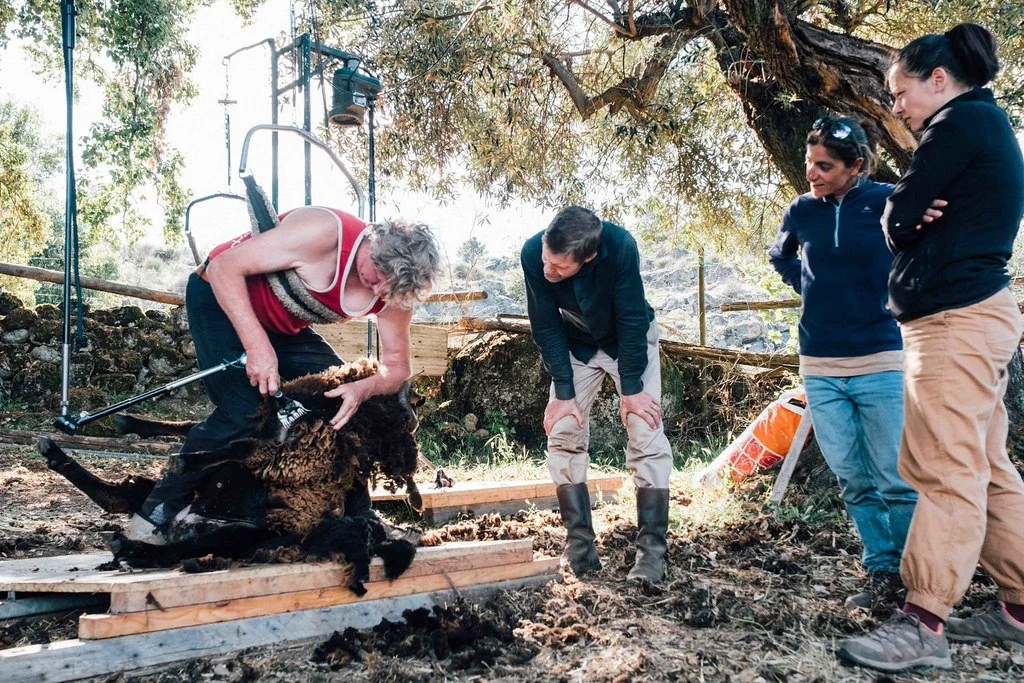
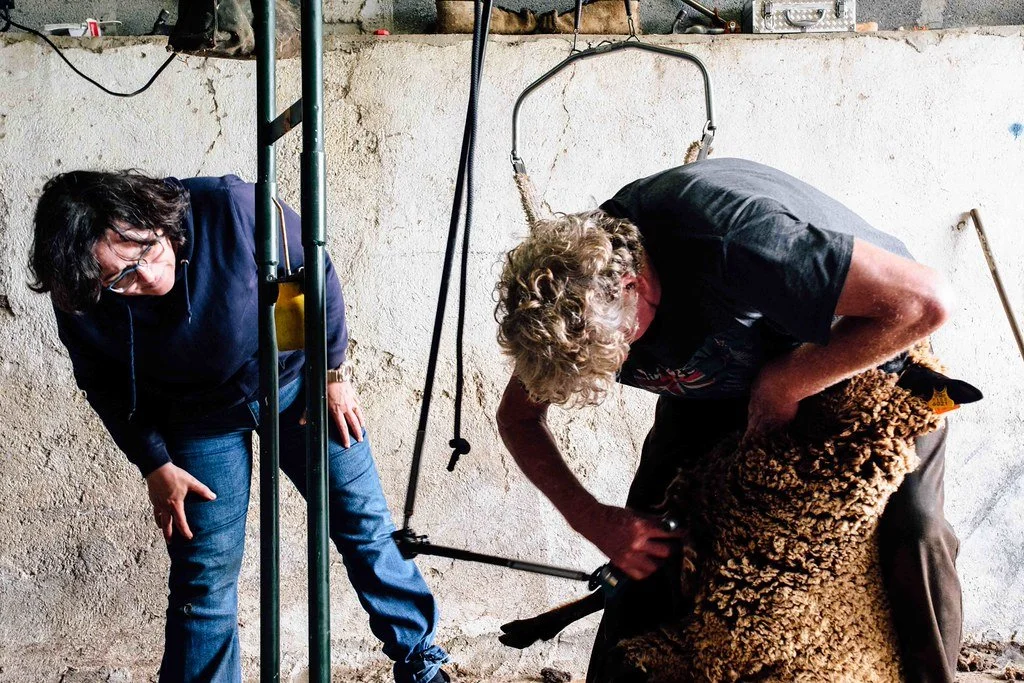
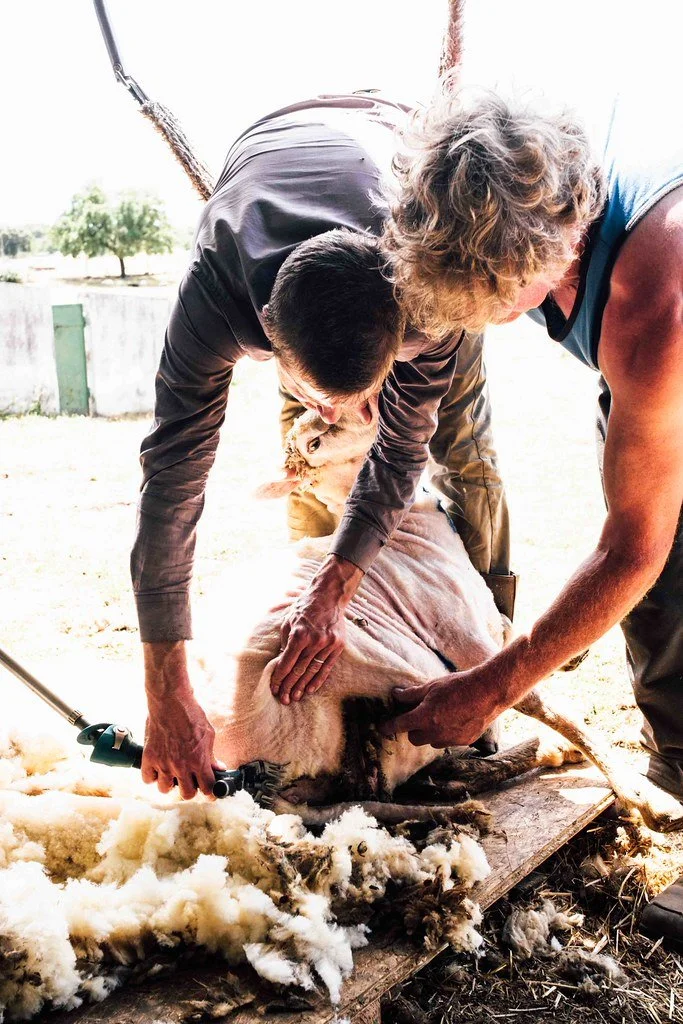
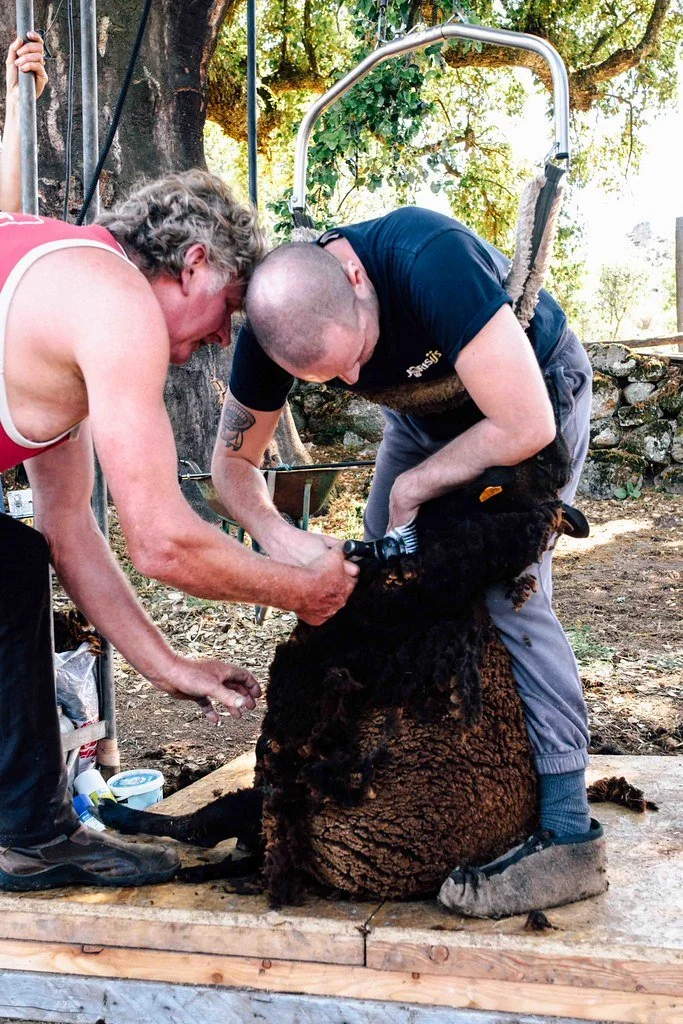
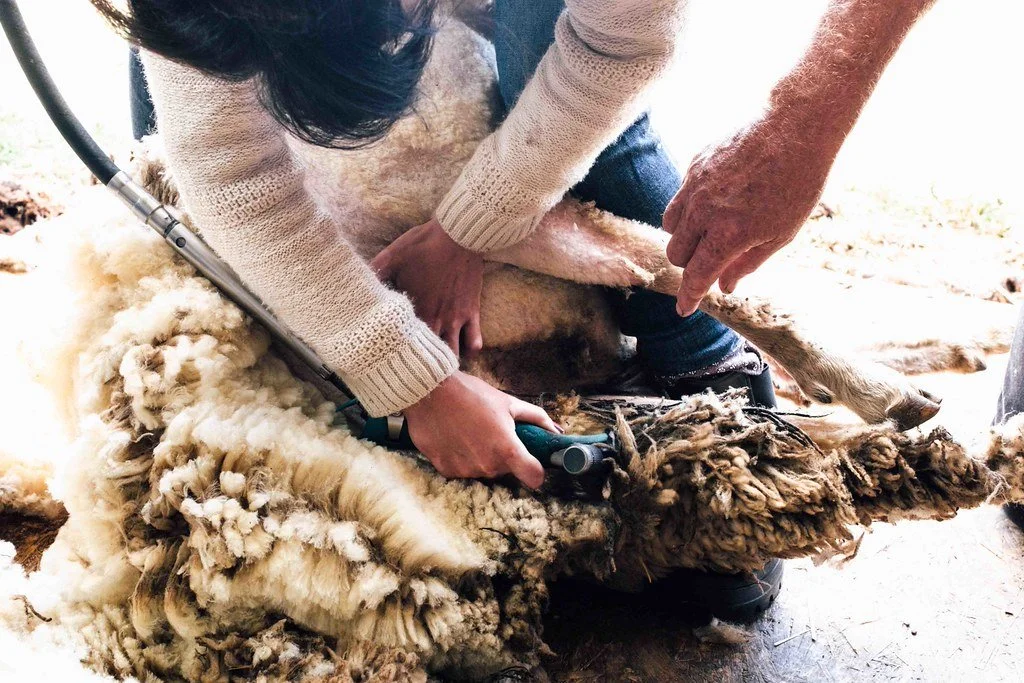
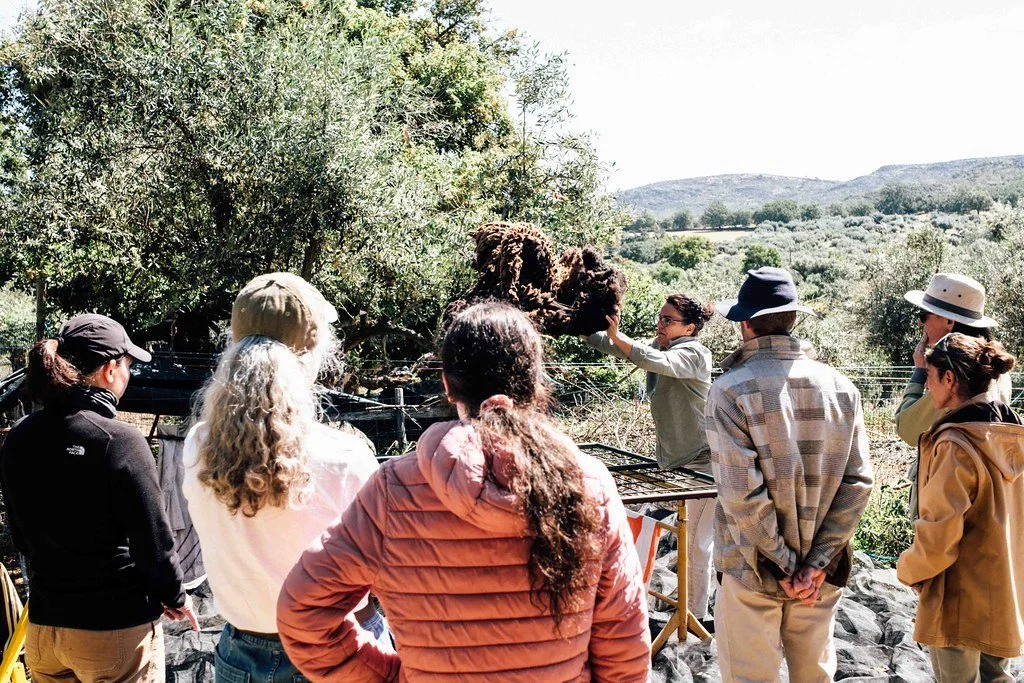
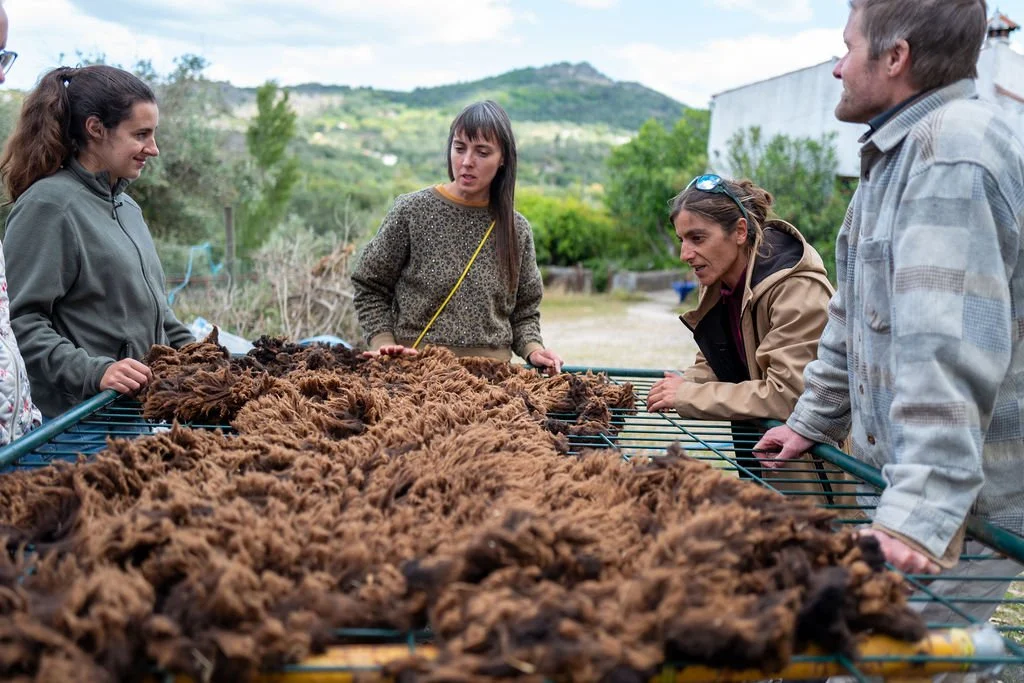
Foto: Rupert Eden