

Women shearing?
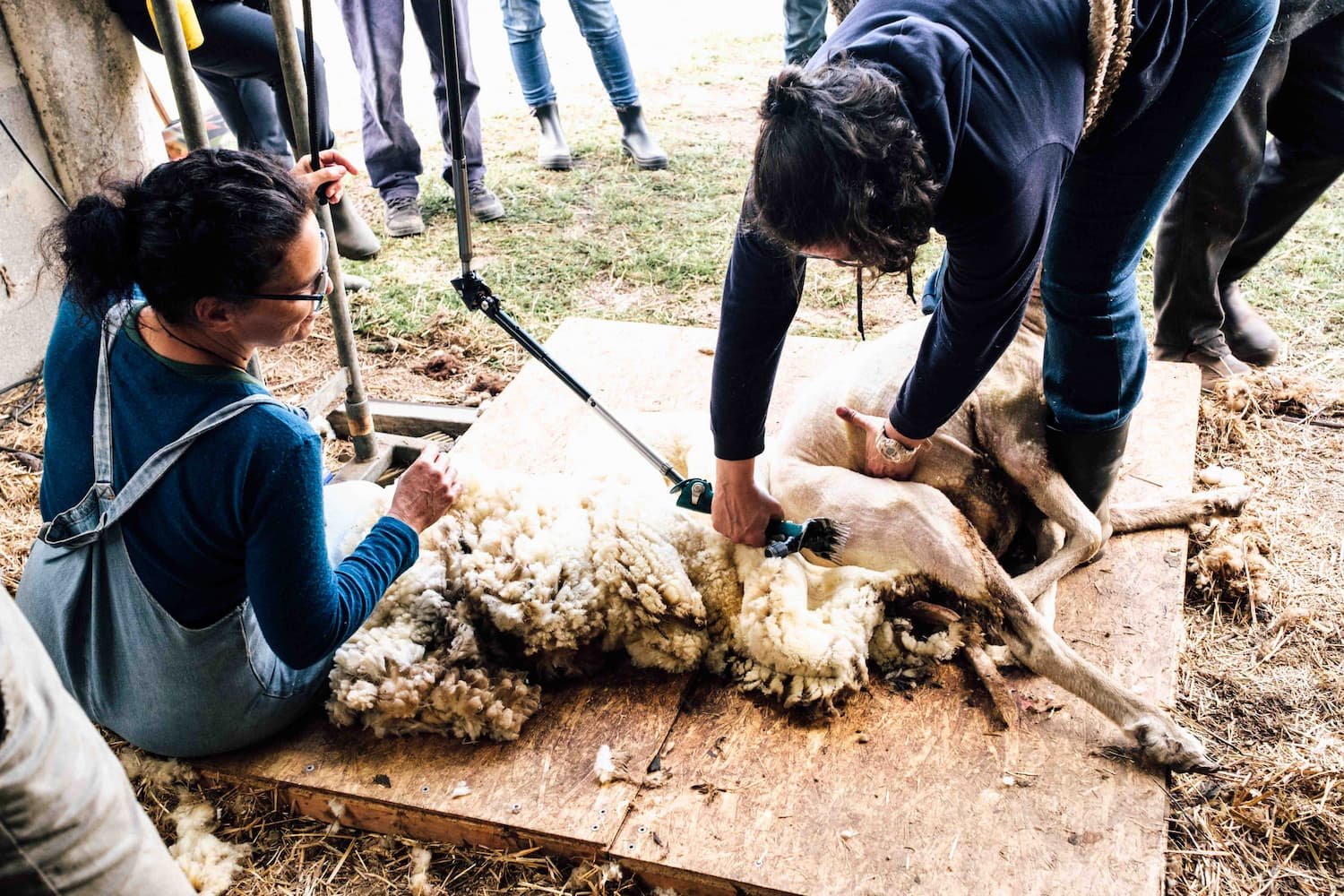
"This is a course for hobbyist women." This was the comment that our sheep shearing course received from a representative of an organisation dedicated to adding value to wool in Portugal, during a round table that took place at the most recent edition of Ovibeja.
On one hand, we are pleased that the work we are doing merits comments at such an important fair. On the other hand, we find it worrying that people in decision-making positions for the wool sector in Portugal should hold such narrow views. Given that the commentator knows neither the profile of those enrolled nor their objectives, we quickly concluded that the classification of "hobbyists" arises simply because they are women.
The growing shortage of qualified shearers in Portugal is a real problem, one that affects small producers in particular. The vast majority of "professional" shearers currently working in Portugal have no technical training whatsoever, and this is one of the factors preventing wool from being properly valued. To underestimate the importance of having professional training courses such as the one we ran last May, and the impact that people of any gender can have in addressing the problem, is a failure of judgement.
Women Shearing? What For?
Of the 16 students on our sheep shearing course, 13 were women. Of the 131 expressions of interest we received, 111 came from women. In the pre-enrolment form, we asked about the goals these people were setting out to achieve. Here are some of their responses:
"To be able to shear independently, to help/advise friends with flocks at shearing time, with a view to eventual sale/processing of the wool."
"To be able to carry out shearing independently and/or to be able to identify and guide a good shearing."
"I wanted to learn about the field so that in the future I can shear the animals I intend to acquire. It would also be a way of complementing my degree in Zootechnical Engineering (animal production)."
"To shear my neighbours' sheep with more care and attention to the animal, and to contribute to the local economy."
"To contribute to the maintenance/survival of shearing as a practice, to pass this knowledge on to others, and to contribute to the development of the rural/local economy."
"I am interested in this skill because sheep need to be shorn to stay healthy. I thought there might be people in my area who cannot afford to have their sheep shorn and that I could help them at no cost."
"To learn to shear so that I can do this work on the small flocks in the village and surrounding area. Through these small actions, I intend to contribute to the process of adding value to wool, from maintaining the sheep's fleece, through to shearing and purchasing the fleeces."
"To gain autonomy in everything related to shearing in particular and to the management of the whole flock."
"To shear my flock and make use of the wool."
"To learn the basics of shearing, and to be able to shear correctly the sheep belonging to flocks in the neighbourhood - sheep belonging to people I know well and whose wool I would like to use, but who frequently shear badly, making subsequent use of the wool impossible."
"My goal is to help my family at shearing time, and other shepherds in the region. Given that there are fewer and fewer shearers."
We quickly came to understand that most of these women arrived with one central goal: to gain autonomy. Those who already have sheep want to stop depending on outside shearers and avoid being at the mercy of an increasingly scarce supply of professionals. Those who do not yet have animals but plan to, see this training as an indispensable prior skill.
Then there are the women who come to the course intending to provide shearing services to others: neighbours, local producers, family members with flocks. Some explicitly mention the possibility of turning this activity into a source of income, filling a gap in their area.
The truth is that the technical empowerment of women in this field, as in many others, has a multiplier effect and a local impact that is rarely measured and therefore rarely recognised.
As a certified training provider in the agricultural area, Saber Fazer acknowledges the potential impact that people of any gender can have on adding value to wool in Portugal, if given the right technical training.
